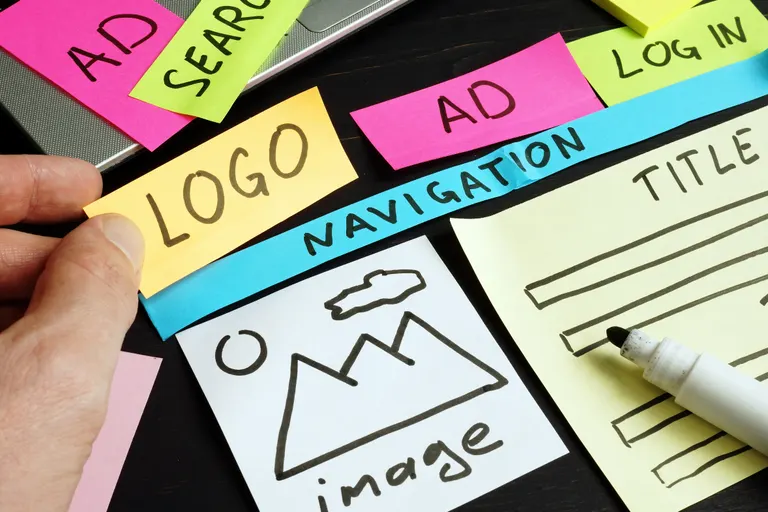

Why I Stopped Selling Website Templates
On September 11, 2026, I retired the Web Design Templates page on this site. Its old address now redirects to Eyecandy, my portfolio. There's no template catalog on popproxx.com anymore: the sites in my plans are custom designs, built in Next.js and hosted on Vercel.
Here's what the page was, what changed, how a template compares with a custom design, and what you get instead.
What the templates page was
The page came over from my old WordPress site when I rebuilt popproxx.com in Next.js earlier this year. It sat in the menu under Our Process and promised a catalog of ready-made website designs to browse.
On the rebuilt site, it didn't show one. The page was mostly a tall placeholder box, with a line about contacting me for a demo partway down.
The word hung on in other places. Until September 14, the list of what came with every package on my homepage started with "Customized Template." The "Every plan includes" list on my homepage and pricing page now starts with "A customized design."
The headline at the top of my homepage today reads: "We build the apps and stores templates can't."
What changed on September 11
- The page is gone. Its address now answers with a permanent redirect to Eyecandy. A permanent redirect tells a browser the page has moved for good and takes the visitor straight to the new address (MDN), so an old link or bookmark still lands somewhere useful.
- The menu is simpler. Our Process is now a plain link, with no dropdown under it.
- Old links go straight there. Links to the templates page inside older blog posts now point at Eyecandy, and searching this site for "templates" brings up Eyecandy too.
I chose Eyecandy as the new home because someone who clicks "templates" wants to see what their site could look like, and real work shows that better than a catalog.
Why I stopped
At first, I used templates because they were a quick way to get a client's site up with a design that looked custom built. But a template never quite fit the brand the client actually had.
Altering one meant working out how another author had built it, and which settings it was designed to let you change. Making a template fit took time, and that time pushed up the cost of the project. Then, when something needed to change later, it was hard to do, because of the way these templates were configured in PHP inside WordPress.
React and Next.js gave me a more flexible way to build. Next.js is the framework, built on React, that this site and every plan site run on. The design is written in CSS, the language that styles web pages, using Tailwind, a toolkit for styling a page right in its code. It's a more modern way to design: a layout can be whatever the brand needs, not whatever a template's settings allow.
Two more reasons, which I wrote down when I retired the page: few of my clients edited their sites themselves, and WordPress builds had become slower than building with Claude Code, the AI coding tool I now build with. I wrote about building this site with it.
A template or a custom design
A template is a finished design with sample text and photos that you replace with your own. The same design is sold, or given away, to anyone who wants it.
What a template does well:
- It's quick. The layout, fonts and colors are decided before you start.
- It costs less up front than a design made for you.
- You see it before you buy it. The demo shows what you'll get.
What it costs you:
- The design came first. Its layout was planned before anyone knew how many services you offer, what your photos look like or how long your words run. Your content gets fitted to the design, not the other way around.
- Other sites can start from the same one.
- Changing it later can mean starting over. For sites built in the Wix Editor, Wix's help center says, as of October 2026, "it is not currently possible to change your site's template"; its suggestion is to create a new site with the template you want (Wix Help Center).
A custom design takes longer and costs more than an off-the-shelf template, because someone designs it for you. That's the trade.
"Custom" doesn't mean every piece is new. My terms say I keep the tools, components and templates I use across projects, and you get a permanent license to keep using the ones in your site. What's different is the starting point: there's no catalog to pick from, and the design is made for your business.
My post on reasons to hire a web designer covers the work that happens around a layout, and the real cost of a "free" website builder adds up three years of a builder against a build.
What a custom design gives my clients is the reverse of the problems that pushed me away from templates. It starts from their brand, not from someone else's demo. And when something needs to change later, I change code I wrote, instead of hunting through another author's settings.
What every plan includes instead
Every plan starts with a customized design and includes two rounds of revisions on it. A round is one batch of requested changes. Here's how the design gets made:
- You choose a plan and pay, in full for 10% off or half now and half before launch.
- You fill in intake, the questionnaire about your business, your pages and your content.
- I design the site and show it to you, and you get your two revision rounds.
- You approve the design, and I build the rest of the site as designed.
- The site launches about 30 days after you finish intake, or 14 with the rush add-on. It depends on you too: I can only build with your content.
Every plan also includes hosting on Vercel with SSL, daily backups and uptime monitoring through the care plan, a site optimized for phones and speed, on-page SEO, Google Analytics, a contact form, stock photos I source, and 30 days of free fixes after launch for anything that's broken.
Two of the terms, in plain words: the 30-day money-back guarantee gives you a full refund within 30 days of finishing intake, or until you approve your design, whichever comes first. And once the build fee is paid in full and the site launches, the design, the pages and the code are yours, and I hand over a copy of the code whenever you ask.
My post on how a Popproxx project works walks through each step.
If your site came from a template
If you already run a WordPress site built from a theme or a template, you don't have to replace it. I still host and look after existing WordPress sites case by case, on LiteSpeed servers I run. Tell me about yours and I'll send a written quote for hosting and upkeep before anything changes. Content and design changes aren't included. A $500 deposit starts the quote. It's refundable until you accept, and credited to the work. Ask for a quote.
See the work, then start
Start with Eyecandy, my portfolio of websites, online stores, brand identities, and print and packaging design.
Then the plans: Starter, $2,400 for five pages; Deluxe, $4,080 for seven; and Premium, $6,720 for ten. Each is one build fee, paid in full for 10% off or half now and half before launch, then the $79/mo care plan from launch day. Compare them on the pricing page.
When you're ready, start a project. If you need an app or a store beyond the simple shop, choose the custom path there: a $500 deposit and intake, then a free written quote. The deposit is refundable in full until you accept the quote, and counts toward the project once you do.

Jamin Giersbach
Jamin Giersbach is one of the three designers who started Popproxx in New York City in 2000. Early clients included WebMD, MSD Capital and Bookmans. In 2007 he took Popproxx to Oregon, and he has run it on his own ever since.
Read the full story →